
Sources Behind San Diego County Previous Residents
A house-history trail has different source strengths across time. The online Recorder index is name and document oriented from 1970 forward. Earlier deed books and indexes require counter or archive work. City directories supply dated occupants, while census schedules describe a household at a snapshot. Permits and Sanborn maps test the structure and project history. Newspapers, probate, and obituaries can explain a departure or connect an heir.
| Source | Years it covers | Where held | What it shows |
|---|---|---|---|
| Official Records online index | 1970-present | ARCC | Deed parties and recording data |
| Earlier deed books and indexes | Before 1970 | ARCC or County Archives | Grantor-grantee and title trail |
| Physical city directories | 1886-2021 | SDPL Special Collections | Occupants, addresses, and context |
| Digitized directories | 1874; 1887-1960 paths | City and library digital collections | Browsable name and street scans |
| Federal census | Through 1950 public | NARA, library databases | Household and address snapshot |
| Sanborn maps | Selected local dates in 1867-1970 set | SDPL eLibrary | Building footprint and street continuity |
| Permits and plans | Portal-era and legacy request files | City or County custodian | Owners, applicants, and work dates |
| San Diego Union | 1868 forward run | SDPL | Obituaries, notices, moves, and probate leads |
Choose the source by the question. The previous residents of a property are not the same as the previous owners, and neither set is guaranteed to include every household member. A directory year and a deed date should be recorded as separate facts.
Begin a San Diego County House History
Normalize the current situs address first. Use the secured assessment roll, ParcelQuest, or SanGIS to obtain the APN, subdivision, lot, dimensions, and recorded-map reference. Online assessment results show values and exemptions but suppress owner identity. Assessor Public Information at 619-236-3771 and ARCC office kiosks provide ownership and mailing-address information. Ask separately for the mailing address because it can differ from the situs.
For previous residents, the current APN is the anchor that lets an old address be tested against the same parcel.
The APN and legal description are the continuity key. A street number may change, a road may be renamed, and a parcel may move from one municipal context to another. Keep the current address, APN, map, lot, and legal description together before searching historical sources.
The ARCC property-records page identifies phone, mail, map, and kiosk channels. ParcelQuest allows up to 25 searches in a rolling 30-day period free, while vendor reports and county copies follow separate pricing and delivery rules.
Walk the San Diego County Deed Chain
A grantor is the party conveying an interest; a grantee receives it. The chain of title is the sequence of recorded transfers tied to the same legal description. Start with the current owner obtained through the custodian, locate the acquisition deed in the Official Records Index, then search the seller as an earlier grantee. Repeat only when the legal description, parcel clues, and dates fit the same property.
- Confirm whether the address is in the City of San Diego, another incorporated city, or unincorporated County territory.
- Capture the current situs, APN, subdivision, lot, map reference, and owner or mailing response.
- Search ARCC’s 1970-present index by grantor or grantee and save the document number and recording date.
- Read the seller or grantor from the acquisition entry, then search that party as an earlier grantee.
- Compare legal descriptions at every step and stop when the chain no longer supports the parcel.
- Use counter indexes, deed books, microfilm, or archives for the years before the online span.
- Legal description
- The formal title description of land, which can preserve identity when a street number changes.
- Chain of title
- A linked sequence of recorded interests, not a list of every person who occupied a structure.
- Recorded instrument
- A filed deed, lien, release, map, or other recordable document indexed by the Recorder.
ARCC’s Official Records Index is free to search, but copies are a separate step. The index begins in 1970 online; that cutoff does not mean earlier deeds were destroyed.
This is the core previous residents trail: current parcel, recorded transfer, earlier grantor, and a legal description that still fits.
San Diego County 1970 Cutoff
December 9, 2024 brought a second access boundary. AB 1785 removed APN search from the public web Official Record Search, while APN searches remain at five ARCC office kiosks. A researcher with only an address should obtain the APN through the assessor or map workflow, then use a kiosk for parcel-keyed recorder research. A name or document-number search remains the web route.
For earlier deed work, ask ARCC or County Archives which grantor-grantee series covers the date. Counter indexes, books, and microfilm are not interchangeable with an online index. Request the series title, inclusive dates, volume, index identifier, and copy process rather than assuming a web gap is a record gap.
A previous residents search that stops at 1970 has reached an online boundary, not necessarily the end of the county’s paper or microfilm trail.
Owner Alert can monitor future documents for up to ten names and ten APNs per email, but it is prospective. It gives a document number and index link after enrollment, not a historical report or document contents.
The ARCC recording page explains the current name, document, date, and kiosk routes.
San Diego County Directories and Past Households
Owners are only half of a previous-residents search. San Diego Public Library Special Collections describes physical city directories from 1886 through 2021. San Diego Yesterday covers 1887 through 1925, while City Clerk Archives has a 1874 volume and selected 1926-1960 scans. Search the street section around the address, not only the surname. Record the printed name, spouse or widow notation, address, occupation, volume, part, and page.
A directory entry represents a publication survey. Children, some occupants, and people who moved during the canvass may be absent. Pair a directory appearance with a deed, census, newspaper, permit, obituary, or probate record. Search adjacent years and nearby numbers when a street was renumbered.
Previous residents often appear first in the address section, while previous owners appear first in a recorded deed. The two trails should be cited separately.
The historical collections themselves are described in the San Diego County city directory archive. This page uses the volumes as a backward address trail rather than repeating the full shelf guide.
Pair San Diego County Directories with Census
The federal census can turn a directory clue into a household snapshot. Public schedules are available through 1950 under the 72-year rule; 1960 becomes public in 2032. Search the directory first for a street, name, or household clue, then inspect the matching census year and enumeration district. If an address index fails, the district and map can be more useful than an exact street string.
- Choose a directory year and copy the exact address and household names.
- Check the closest released census year, preserving the census address and enumeration district.
- Compare spouse, age range, birthplace, children, and occupation marks without treating one field as conclusive.
- Return to the next directory year and note first, last, and changed appearances.
- Use newspapers, probate, deeds, and permits to explain a move, death, or replacement household.
San Diego’s 1898 city census is a rare local bridge around the loss of most 1890 federal population schedules. The Great Register from 1888-1892 and the San Diego Union from 1868 add other dated clues.
San Diego County Permits and Sanborn Maps
Permits date construction, additions, inspections, and project responsibility. City Development Services keeps permits, plans, zoning files, and inspections for City of San Diego property. Older paper plans may need a Records Review appointment or a CPRA request. Other incorporated cities and unincorporated County areas use different custodians. A permit names an applicant, owner, contractor, address, scope, valuation, issue date, final date, or status; it does not prove household membership.
Sanborn Fire Insurance Maps show footprints, use, construction, street names and numbers, and changes over time. SDPL’s licensed California set covers 1867-1970. Compare a map sheet with the APN, recorded map, directory entry, and permit date. If the building footprint changes, a vanished name may reflect demolition or a new structure rather than a move.
San Diego’s historic-property research route connects Assessor maps, City Planning, SDPL, Sanborn maps, B and C sheets, and the History Center. Each source tests a different part of the address story.
San Diego County Address Renumbering
Street numbers are not stable over a century. Downtown numbered and lettered streets, former towns, beach areas, subdivisions, and unincorporated communities developed with different grids. The legal description, APN, subdivision, lot, and recorded map preserve a stronger link than the postal line. Search a reverse directory around the old and new number, then use a Sanborn map or B and C sheet to test the change.
Jurisdiction matters as well. A current address may be in the City of San Diego, another county city, an unincorporated community, a military property, a university route, or tribal territory. Deeds, assessment, tax, and Superior Court records remain countywide, but permit, code, police, council, and community records follow the actual custodian.
Keep a small address crosswalk: printed historic address, current situs, APN, legal description, map sheet, municipality, ZIP, and source date. That crosswalk prevents a good deed chain from being attached to the wrong building.
Time-Stamped San Diego County Custody Sources
Custody records can help answer a narrow question about where a person was recorded at a point in time, but they are not a house-history substitute. The Sheriff’s Who’s in Jail tool describes current county custody, and the California Department of Corrections and Rehabilitation locator covers state custody. A result can lag intake or release and is not a conviction record. These tools should be used only to check a dated lead, not to infer that a person lived at a historical address.
The official San Diego County Sheriff custody lookup is free. The Sheriff’s jail-information page supplies custody contacts and cautions. The state route is the CDCR Inmate Locator. Federal custody uses a separate federal locator. Save the source date and result limitations if a custody entry helps distinguish two people with the same name.
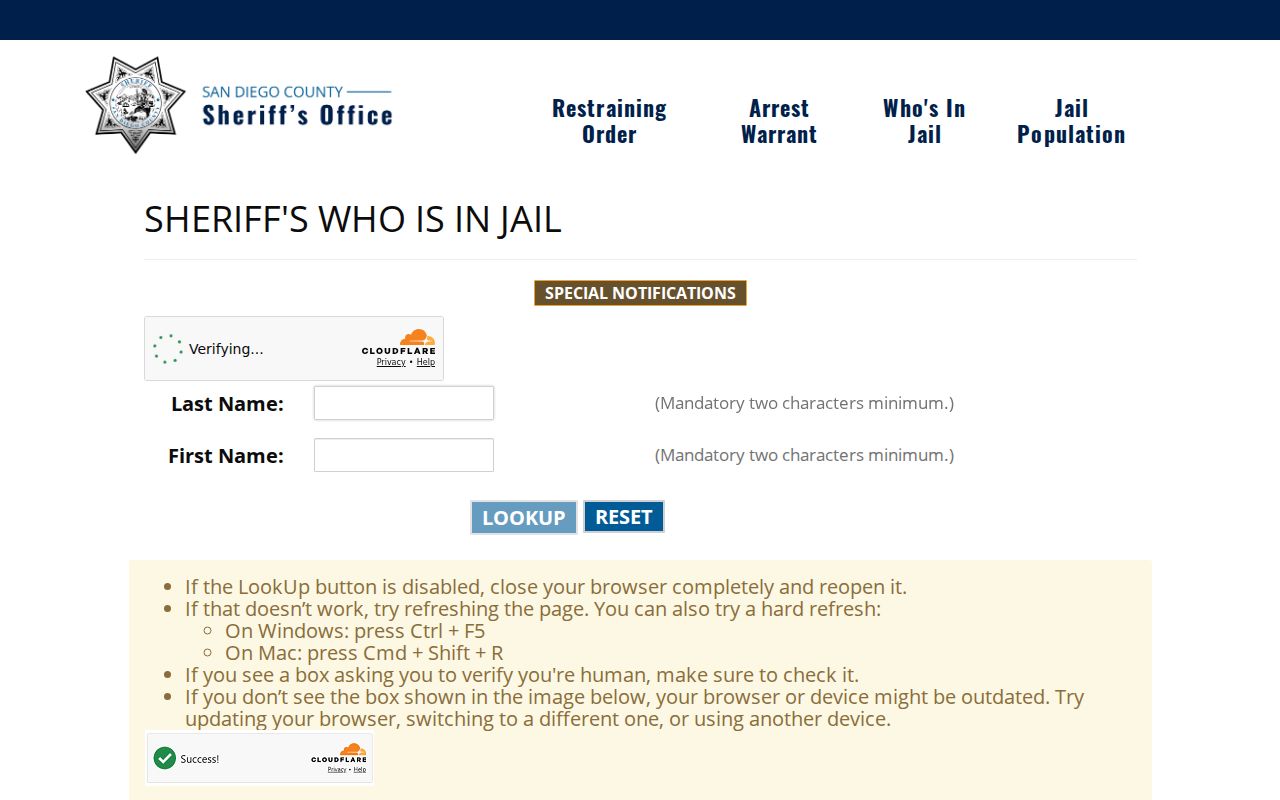
The county custody search illustrates why a time-stamped public result must not be mistaken for a permanent resident record.
For a federal custody check, use the Federal Bureau of Prisons inmate locator and save its date and coverage limits.
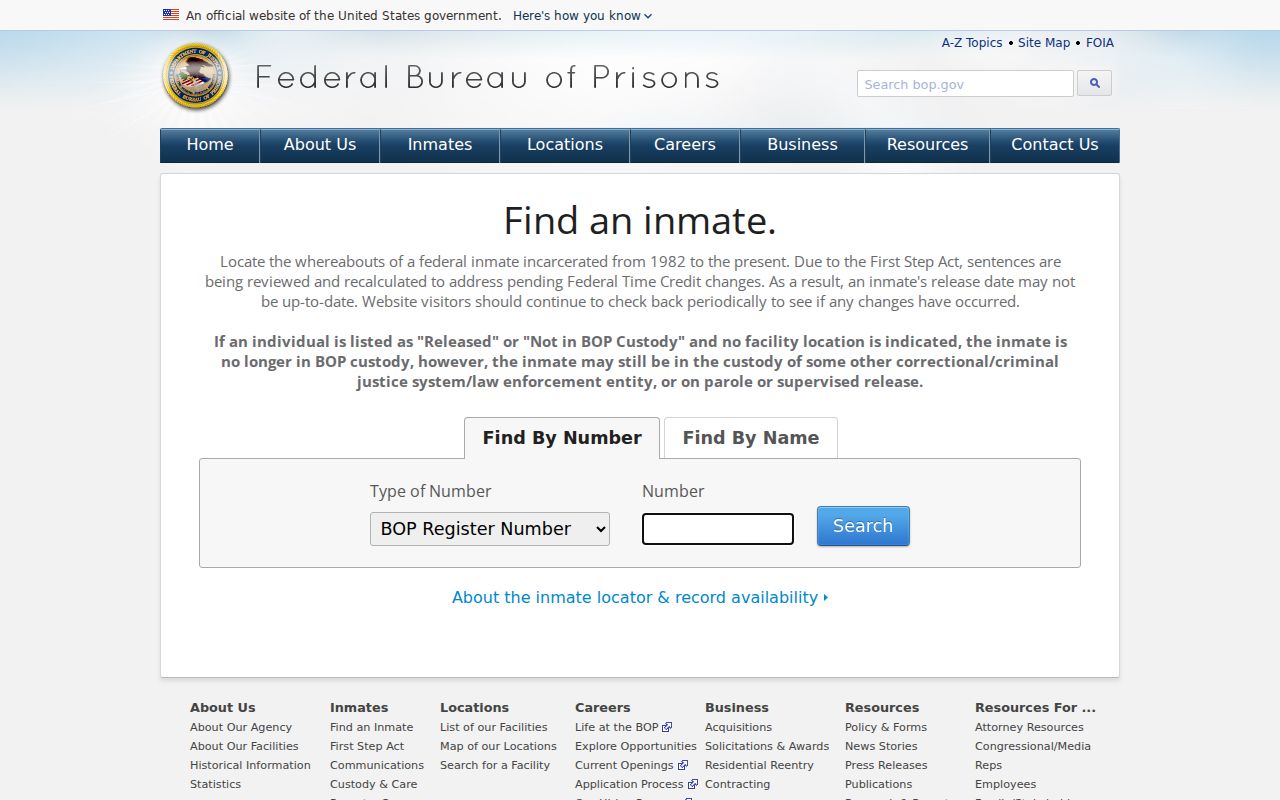
The federal locator is another separate custodian and coverage layer; it does not repair a missing deed, directory, or census entry.
San Diego County Previous Residents Trail
Obituaries, cemetery files, and probate can close an address trail when a former household member died or an estate changed hands. The City Archives’ Mount Hope material spans 1869-1969. The San Diego Union run begins in 1868. A probate petition can identify a decedent, petitioner, heirs, or property clue; a deed can then test a transfer. Use a certified vital copy when proof of an event is required.
A previous residents trail is strongest when the dated occupant clue and the property transfer answer different parts of the same question.
Negative searches need a boundary note. The online deed index begins in 1970. Court indexes omit pre-1974 cases and other categories. Directory scans may have OCR errors or split sections. A street number may have changed. A missing name can reflect a source limit rather than an empty house.
A complete citation records the custodian, source title, date range, page or document number, address form, APN or legal description, and access channel. That makes a backward trail testable even when it stops before the oldest surviving record.