
Finding San Diego County Neighbors
A block lookup has a clear order. Find the target address in SanGIS or the assessment roll. Write down its APN, then click each parcel sharing a boundary. Use the APNs to identify the adjacent lots, and ask Assessor Public Information or visit an ARCC kiosk for owner and mailing-address information. Use the Recorder for named deed events, permits for address-dated work, and planning groups for public civic contacts. These sources describe property, filings, or public roles. They do not create a household roster.
| Block source | What it shows about a block | Access |
|---|---|---|
| SanGIS and assessor map | Parcel geometry, boundaries, adjacent APNs | Free map viewer |
| Assessor custodian | Owner and mailing-address information | Phone or office kiosk |
| Recorder index | Deeds, liens, releases, indexed parties | 1970-present index; counter and copies |
| Permit records | Applicants, owners, contractors, project dates | Portal, review, or request |
| Voter file | Restricted registration fields for permitted purposes | Not a public block list |
| Planning groups | Public officers, agendas, boundaries, contacts | City planning pages |
| Reverse directories | Historical address-to-occupant clues | Library collection |
The strongest block fact is usually geometric: two parcels share a boundary. The next fact is a dated property or public-record association. A person’s presence at the address requires a separate, lawful source and should not be inferred from a map shape.
For San Diego County neighbors, the useful result is a documented block relationship, not an unsupported list of names.
Click San Diego County Parcels
SanGIS and the assessor map make adjacency visible. Search the address or APN, zoom until parcel outlines show, click the target feature, and write down the APN. Click each lot sharing a boundary, not only the lot across a street. Preserve the map date, layer names, subdivision, lot, dimensions, and jurisdiction. Then ask the custodian for the owner and mailing information attached to each APN.
- Normalize the target street address and find its parcel in the SanGIS Interactive Map.
- Identify the target feature and record its APN, municipality, planning context, lot, and map reference.
- Click each shared-boundary parcel and create a short APN list for the block.
- Call Assessor Public Information at 619-236-3771 or visit an ARCC kiosk for ownership and mailing data.
- Use deeds, permits, or planning records only when the question calls for a dated person or property association.
Map adjacency does not establish household membership. A large parcel may contain several structures, a high-rise parcel may contain many units, and a mailing address may point elsewhere. For the whole named street, use the San Diego County street directory; the neighbor page owns the immediate block.
San Diego County Assessor Ownership versus Households
The current secured assessment roll accepts parcel number, address, or street name. It shows assessed values and exemptions but suppresses owner names on the public web form. ARCC’s phone and kiosk routes can provide ownership and mailing-address information. ParcelQuest supplies APNs, characteristics, and maps, with up to 25 searches in a rolling 30-day period free before vendor limits or paid reports may apply.
Separate owner, mailing addressee, and occupant in every note. The owner may receive tax correspondence at another address. A claimed homeowner exemption can be a useful clue but is not a complete resident list. A parcel record also omits many household members. California voter addresses, utility customers, delivery records, and DMV data are not open substitutes for those missing names.
A resident lookup is appropriate when one person is the question. A neighbor block lookup should stop at the property and public-record evidence that the source actually supports.
Map a San Diego County Block
Permits can show what happened at the surrounding parcels and when. City of San Diego Development Services holds building permits, plans, inspections, zoning files, and project records. Modern and older permit systems can be address or project keyed. A record may name applicants, owners, contractors, scope, valuation, issue and final dates, and status. It proves a project relationship, not that a named person lived at the site.
Jurisdiction must be checked before a request. Another incorporated city maintains its own permit and code files. An unincorporated San Diego County address can route to County Planning and Development Services. Military, tribal, campus, and federal property may use a separate custodian. A CPRA request should identify the address or APN, date range, project number, record type, and preferred format.
The City development records route explains the portal, review, and request paths. Use permits to map dated activity on a block, not to build a list of household members.
San Diego County Block Voter Data
California does not offer an unrestricted public voter block list. My Voter Status is a self-service identity check. It can return a registrant’s own status, party preference, districts, polling or vote-center information, ballot status, and participation history, but it does not reveal ballot choices. Government Code section 7924.000 keeps home street address, telephone, email, identifiers, prior registration, and signature confidential to the general public.
Elections Code section 2194 allows permitted-purpose access for election, scholarly, journalistic, political, or governmental work as election officials determine. A voter-file request requires a stated purpose, project or organization details, requested fields, security commitments, and the required fee. Commercial use is prohibited. Protected voters and Safe at Home participants have additional confidentiality rules.
The official California voter-file request route is a restricted records channel, not a way to populate a public neighbor directory.
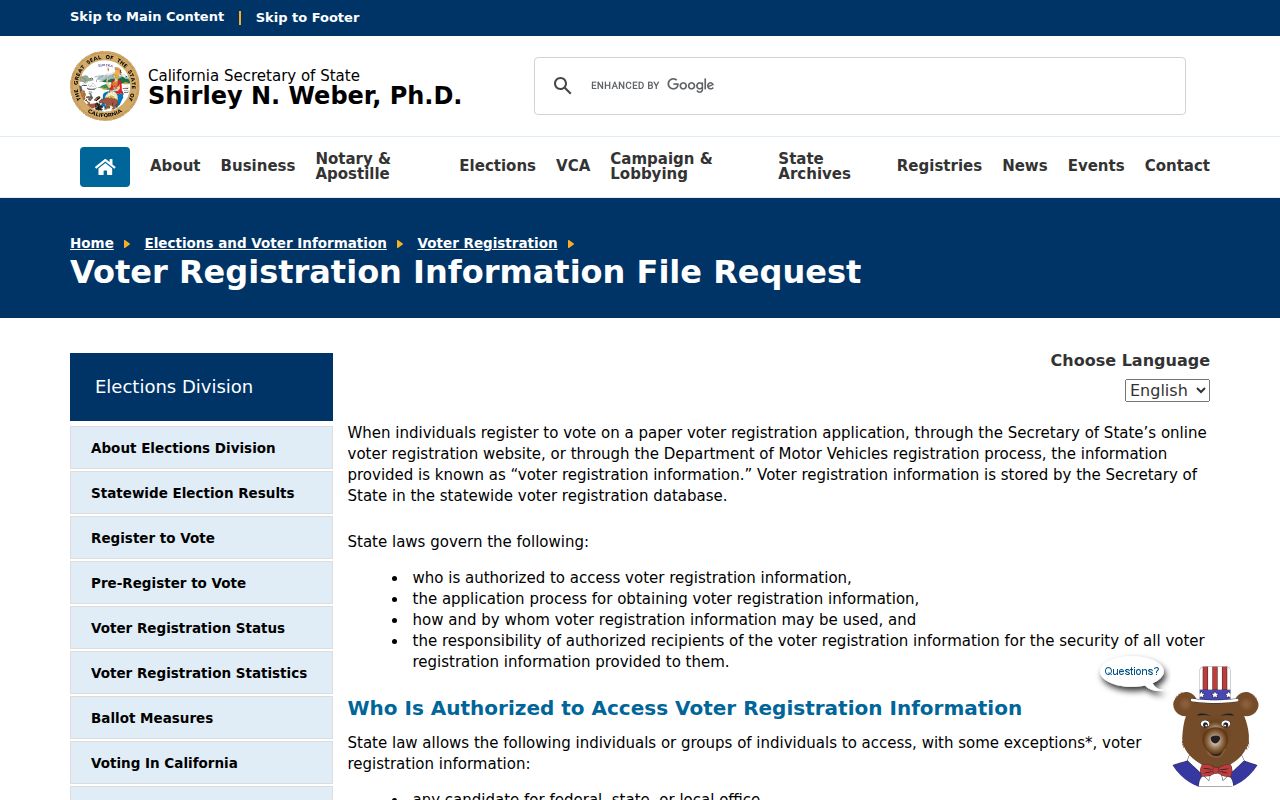
The voter-file request form shows why purpose, field limits, and security conditions matter at block scale.
For the self-check form, open California My Voter Status; it is designed for the individual registrant, not a block enumeration.
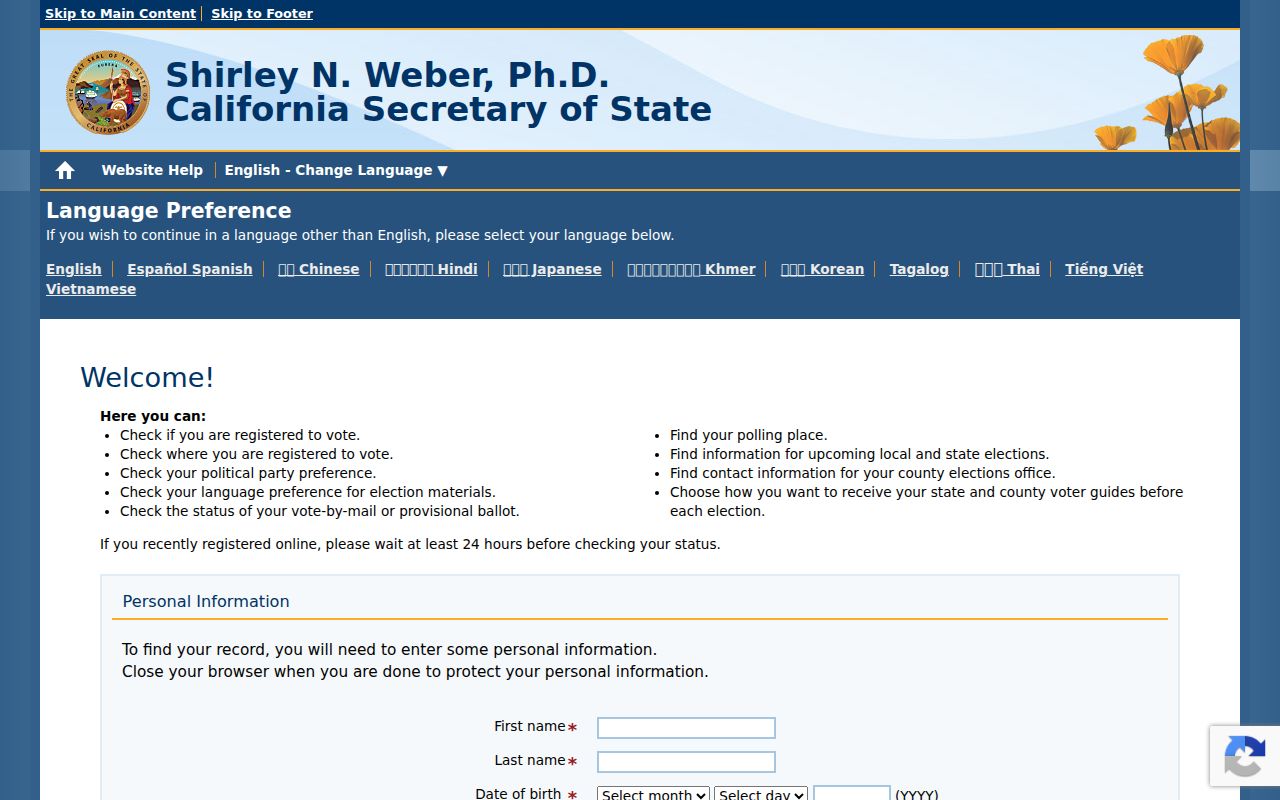
My Voter Status is designed for the individual registrant’s own verification, not for enumerating neighbors.
San Diego County Planning Groups
San Diego recognizes 52 official community planning areas. The planning pages provide boundaries, community plans, agendas, minutes, recognized groups, and public contacts. Those materials are useful when a neighborhood name does not match a postal place or when a dated civic action needs to be located. They are civic-process directories, not membership rolls.
| Public contact route | What it publishes |
|---|---|
| City Planning community areas | Maps, plans, meeting schedules, and recognized group contacts |
| Community planning group | Public officers, agendas, minutes, and dated speakers or applicants |
| Neighborhood association | Contact information or public notices when voluntarily posted |
| HOA or common-interest record | Possible governing documents, manager, or filing clues |
Use the San Diego community-planning areas page to route a block question. A meeting minute may identify a speaker or applicant at a dated civic proceeding. It should not be used to compile private attendees or infer who lives on the block.
These public contacts help San Diego County neighbors understand civic routes without exposing a private membership list.
San Diego County HOA Rosters
HOAs and common-interest associations can help with a neighborhood’s governing documents or a public management contact, but a private membership roster is not automatically a public record. Look for a recorded declaration, common-interest filing, Secretary of State business record, management page, or owner-provided contact. The presence of an HOA says something about governance, not about every person at a parcel.
Community organizations, congregations, neighborhood watches, and clubs follow the same rule. Public officers and meeting contacts may be posted. Private members, volunteers, and household lists remain controlled by the organization unless voluntarily published. A public directory should not imply that a request can compel a private roster.
For a civic-history question, compare an association contact with planning minutes, permits, newspapers, or a local archive. For a household question, stop at the lawful source boundary.
Historic San Diego County Neighbors
Historical neighbors can be reconstructed from address-first city directories. San Diego Public Library Special Collections describes physical directories from 1886 through 2021, with San Diego Yesterday covering 1887-1925 and City Clerk Archives scans for 1874 and selected 1926-1960 volumes. Search the street section around the target number, record the adjacent entries, and compare the next annual volume.
Sanborn maps and B and C sheets can explain a lot split, demolished structure, or street change. A directory entry is a dated occupant clue, while a deed is a title event. Keep those evidence types separate. A historical block reconstruction can include newspapers, the Great Register from 1888-1892, the 1898 city census, and the San Diego Union run from 1868.
OCR is only an aid. Inspect the scan around a hit, try spelling and diacritic variants, and cite the volume, part, and page. A missing entry can reflect a scan or canvass limit.
San Diego County Privacy and Neighbor Tools
Official records and commercial neighbor tools have different strengths. Official sources identify the custodian, fields, date, and access rule. Commercial tools may merge names, repeat stale addresses, and hide their source trail. Neither category authorizes contact with a person who does not want it. Use an official record only for the narrow claim it supports.
| Source type | Strength | Boundary |
|---|---|---|
| ARCC and SanGIS | Parcel, map, ownership route | Owner is not household |
| Recorder and permits | Dated filings and projects | Party or applicant is not occupant |
| Planning groups | Public civic contacts | No private member roster |
| Commercial neighbor tools | Convenience and aggregation | Source, age, and accuracy can be unclear |
The Safe at Home program and voter confidentiality rules can suppress addresses. Government Code sections 6205 through 6216 protect qualifying participants through a designated mailing address and confidential registration. The Safe at Home governing-law page supplies the program’s statutory route. Do not reconstruct a protected address from deeds, maps, or other unrelated clues.
For the specific voter-field restriction, read Government Code section 7924.000 before treating an absent address as a failed search.
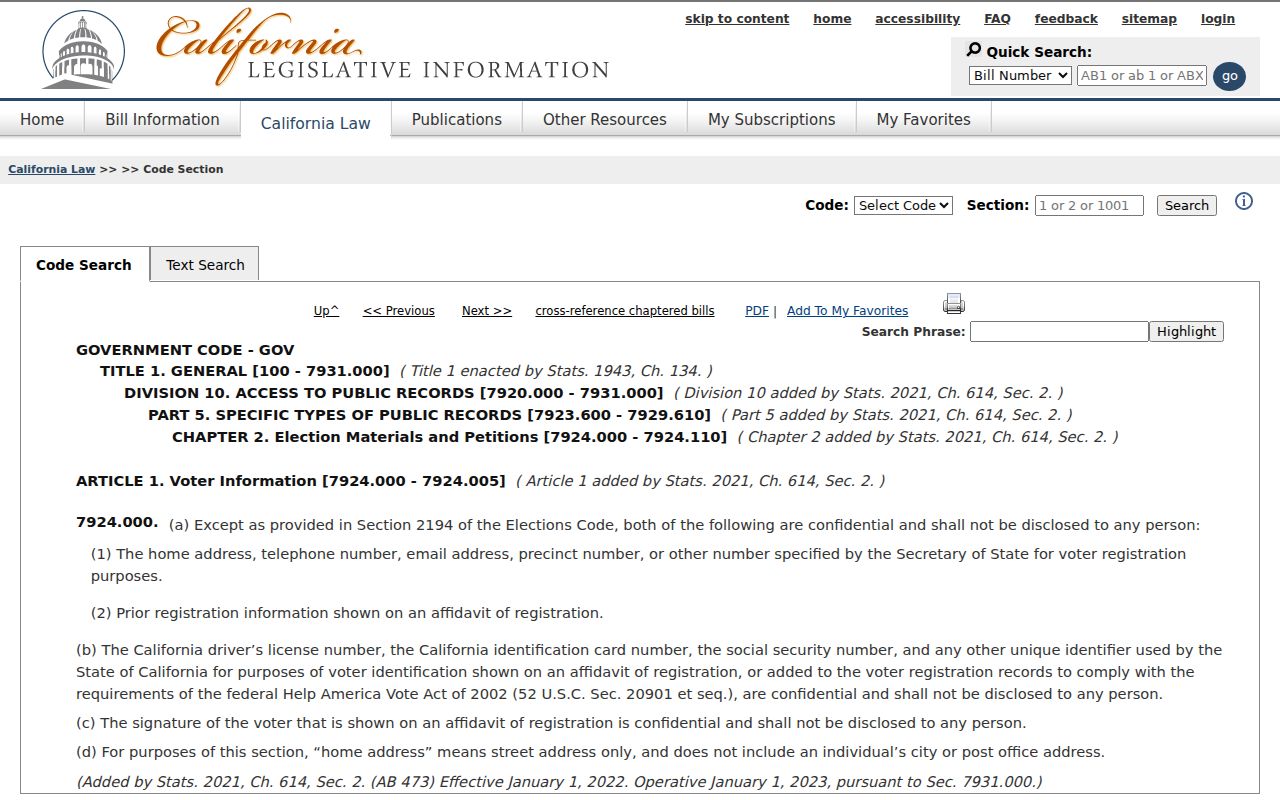
The voter privacy guidance identifies information that stays closed to general public block searches and the permitted-use limits that still apply to approved requests.
The California Megan’s Law search is a separate official registry with its own statutory-use warning; it is not a general neighbor directory.
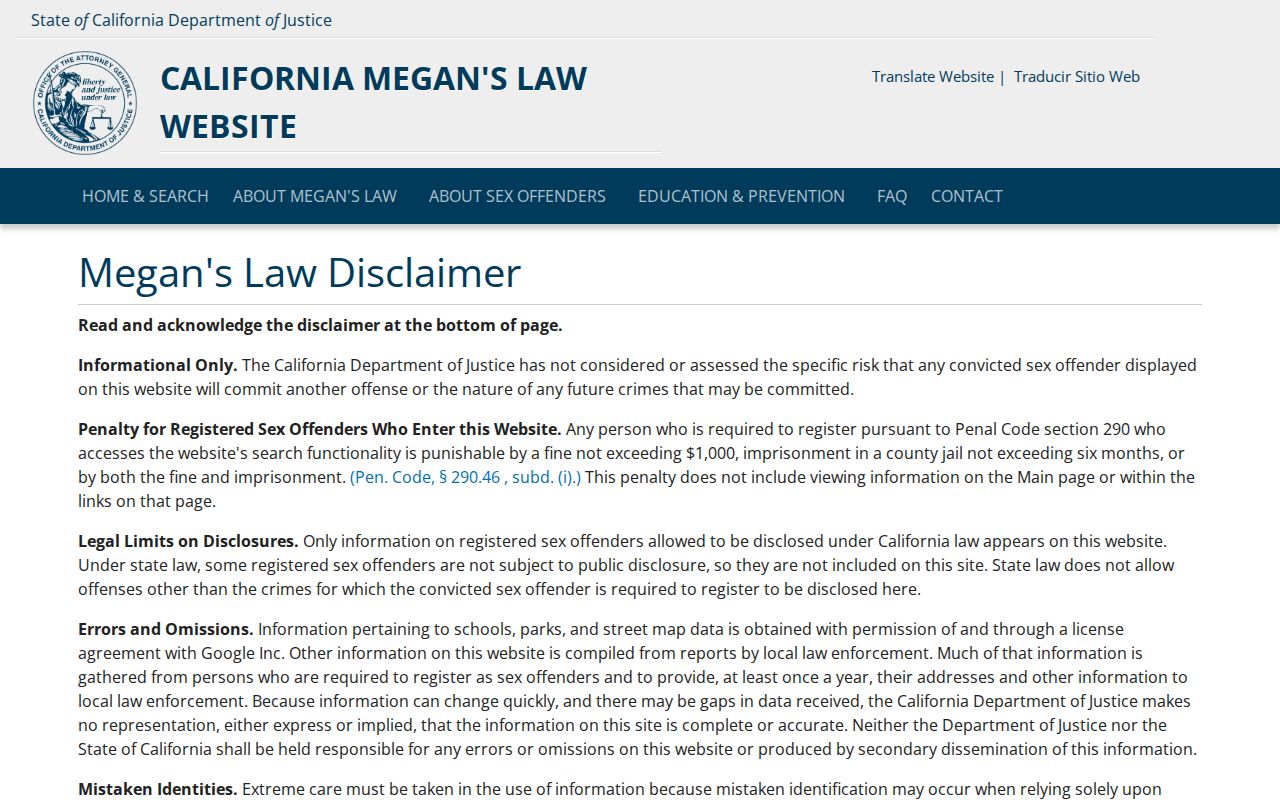
An official registry with statutory warnings is a narrow public record and should not be treated as a general neighbor directory or a reason for unwanted contact.
Privacy Limits on San Diego County Neighbors
Neighbors are not a single searchable category. The map can identify adjacent parcels. The assessor can route an owner request. A deed can name a party. A permit can name a project participant. The voter file can be accessed only through permitted channels. An occupant, child, visitor, or household member may not appear in any of them. Treat absence as a source limit, not proof that no one lives there.
California Penal Code section 646.9 addresses stalking, section 653m addresses harassing electronic communications, and Code of Civil Procedure section 527.6 addresses civil harassment restraining orders. Public information does not authorize surveillance, doxxing, threats, impersonation, or unwanted contact. Ordinary safety awareness and family history are lawful aims; harm is not.
If the goal shifts from the immediate block to a full named street, use the street-by-street address workflow. If the goal is one person, use independent records and identity anchors rather than broad neighbor aggregation.